A Middle Eastern Opera
December 24, 2010

I’m reading a book about Hezbollah, the Lebanese military group and how they’re at war with Israel. So I was thinking how all of what I know about the Middle East is what I read in the newspapers (and the research that I’ve done on my own). Wouldn’t it be cool if there was an opera about the strife between the countries there and we focused instead on something else besides the war (like food!). So I came up with some dialogue. You have to imagine it in Arabic though. ENJOY!
Ibrahim (from Lebanon) and Daudi (from Israel) are fighting each other when a young Palestinian woman named Abda, comes carrying a dish of hummus and pita bread.
Ibrahim: Dude! Hummus!
Daudi: I kill you instead.
Abda. But what will you eat while you kill?
Daudi: Hummus burgers anyone?
Ibrahim: Dude, I like falafel. It’s fast food and more popular than hummus here.
Daudi: If you kill me, I want falafel.
Abda: I have falafel sandwiches here as well. I prefer tabbouleh.
Daudi: What do women like better? Falafel or hummus?
Abda: I’m different, but they might prefer baba ghanoush.
Ibrahim: What about meat dishes?
Daudi: Yes, meat, yogurt, vegetables, baklava, you name it, the Middle East has it!
Abda: If I get it for you will you pray together at the mosque?
Ibrahim: I will do anything for my falafel.
Better climb that beanstalk now!
December 8, 2010

Whether it’s dairy, eggs, beans, meat, or nuts,
Amino Acids = protein for anyone, no ifs, ands, or buts.
There are so many different kinds; let’s see: leucine, methionine, cystine,
But most amino acids are found in dairy, eggs, and meat, which is mean.
So on to vitamins and minerals, for that is where beans, legumes, and nuts thrive,
Hummus is good for iron, vitamin C, folate, vitamin B6, fiber and protein, to keep you alive!
How’s that for proper dietary supplement from beans?
Or if you want to be really rebellious, try the legumes; they may even help your spleen!
And then there’s starch/carbs, which are necessary, but don’t overload.
If you do, then, Beware!, you may transform into a toad!
So sample some fava, kidney, pinto, garbanzo, or any other kind of beans today!
Because if you do, you will certainly be able to have your way!
Beirut’s looking prreetttty nice right now…
November 23, 2010

Yeah, so I’m sick of Lansdale, PA. So I started to dream and since I’m into all things hummus and my Mediterranean restaurant friends are from Lebanon, I started to think that Beirut would be the place to go.
Maybe all those newspaper articles about the Iraq War have gotten to me because I read and care more about the Middle East now then when Bush was in office. Beirut, Lebanon is known as the Paris of the Middle East, according to Wadih of Oasis. However, like Iraq, they had some troubles, particularly a civil war from 1982 to 1990.
However, I still want to go to Beirut because not only did The New York Times rate it as the top place to visit in 2009, but Beirut now has a redesigned city center, marina, pubs, nightlife districts, and also hundreds of art galleries.
Maybe, dreamer that I am, I could go to the Middle East! I just applied to the tourism job sight, so who knows, I could be there next summer!
My new Egyptian friends…
November 12, 2010

Since I’m obsessed with chickpeas, I had to make the unhealthy food, falafel, out of it at least once. It’s amazing to me that we have all this fast food here, but yet don’t take advantage of the deep fried falafel. And yet hummus is gaining in popularity as evidence by the attention it gets in magazines, stores (such as Whole Foods), and displays.
So falafel is historically an Egyptian dish and I just happened to sign up for a Save the Children child from there so I have my connections. Wikipedia says that falafel’s origins are controversial, which may be because food is such a big deal to them (just a guess).
But to make the falafel, I soaked the chickpeas for over 12 hours, then added tahini, lemon juice, water, onions, and a bunch of spices. Because mine seemed too watery (I think I added too much lemon juice, I added what felt like a cup of flour (supposed to be 2 Tb). So I fried them in vegetable oil and ate them with drizzles of tahini and some tomatoes and all was well.
Hey! This pyramid doesn’t look anything like the USDA one!
October 30, 2010
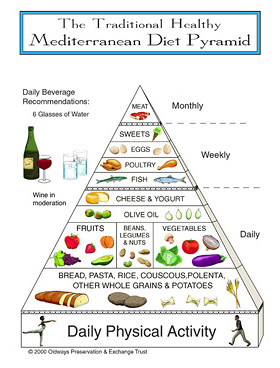
Culinary school completes me. The past three weeks in class we learned about beef, chicken, and fish. Beef was a disaster for me, but chicken was surprisingly fun because we got to cut them up. One of those weeks, the senior culinary students cooked Mediterranean cuisine such as bakliva, baba ghanoush, and of course hummus. According to the book, “Secrets of Healthy Middle Eastern Cuisine, by Sanaa Abourezk, there is a Mediterranean food pyramid that offers beans, legumes, and nuts as a daily food to eat, while the US Department of Agriculture just lumps them in with meat. You can see it to the left.
So the fact that I’m studying about all these “fatty” foods like eggs, dairy, and meat (well we did learn about vegetables and fruits one week) is all the more fascinating because the higher level classes learn about different cultures’ cuisine and that seems more healthy (though there was meat in some of their dishes). And just flipping through this Middle Eastern informative cookbook shows me that maybe the vegetarian cuisine that’s becoming more and more popular in America could work well for Middle Easterners. Just a thought…
A dip, a spread, and a sauce walk into a bar…
October 18, 2010
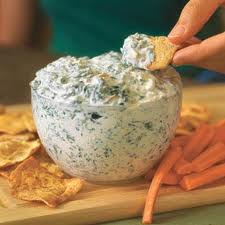
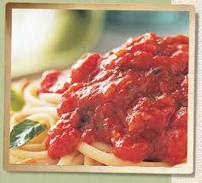

So what is the difference between these three condiments? Well, I did a survey of about 70 people asking them what their favorite dip was and got varied ethnic answers such as Mexican (guacamole, refried beans, salsa, and layer dips with cheese and sour cream were popular), Lipton’s “French” onion dip, Switzerland’s fondue, and naturally the Middle Eastern hummus (with edamame, black bean, baba ghanoush, and red pepper hummus coming up). So I wondered, if Mexican American food (just look at Taco Bell) is totally different than traditional Mexican food (think beans, corn, and chiles), is Middle Eastern food headed in that direction?
Because someone said that they don’t like Middle Eastern hummus, but LOVE the Americanized processed kind. Also, I hear that all these American Middle Eastern restaurants are sooo very popular here. I wonder, why aren’t authentic Mexican restaurants as respected as these hummus connoisseurs? Will we have hummus chains soon?
Actually, I found out, we do. I just visited Maoz vegetarian, where they of course have hummus, but also falafal (need to make this) and salads, babaganoush, sweet potato fries, and other veggie options. It was founded in Amsterdam in 1991.
Also, to differentiate between the dip, spread, and sauce, I researched dips and found that they became popular after World War II. Spreads go on bread obviously which explains why pesto did not get mentioned (although I think pesto falls under all three categories). I think guacamole falls under all the dip, spread, and sauce categories too. But ketchup did get mentioned, which might be a sauce as well as a dip. And don’t get me started on sauces. I’m finding all about sauces in culinary school and those might be even more popular than dips, though we take them for granted maybe.
P.S. spinach artichoke, ranch, cream cheese, and cheese variation dips were popular too.

Middle Easteners like to throw hummus parties! Wish they invited me!
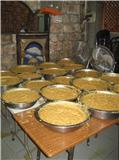
My childhood friend got to experience Israeli hummus in all its glory! (I read that Palestine blames Israel for taking their secret hummus recipe). One of many discords for these two at war countries.
I feel guilty. I’ve been enjoying and worshipping hummus in all its Americana, but haven’t found the time (or energy) to appreciate its origins. So I did a little research on Lebanon, Palestine, and Israel (all the while mistaking Palestine for Pakistan) and found out that though these countries are sometime repressed, they’re also probably waaaay healthier. That’s not surprising. What’s surprising to me is that they’re embracing Western food more and more while we are embracing (and commercializing) hummus more and more. And we have political issues with so many of these Middle Eastern countries that gave us this healthier appetizer that could save us many trips to the hospital. Am I being naive, or could we solve some peace issues with this?
AHHH!!! It’s the dreaded eggplant!
September 12, 2010
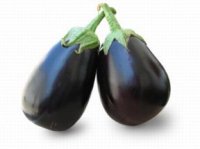 I must confess, I’m a little scared of eggplant and even more scared of tofu (although I do have a tofu cookbook, so I could learn to love…) But I had baba ghanosh a couple weeks ago with a friend and felt like it was time to learn to love and make the stuff. Luckily it has a lot of the same stuff as hummus like tahini, olive oil, and lemon juice so it didn’t feel too awkward. So anyway, I roasted the eggplants for about an hour and took out the insides and made it into a spread, aka, like my hummus. Although the trick to loviing baba ghanosh is adding plain yogurt to it because it definitely adds texture.
I thought there had to be a correlation between hummus and baba ghanosh in terms of where it comes from and it is Arab, but according to my sources its highest producer is China! But that can’t be true because wikipedia says that the Levant (this includes Lebanon, Syria, Jordan, and Iraq) has it all the time and Egypt, Turkey, Greece, and India also love it.
It’s not like I’ve never had eggplant before. I make a mean pizza topping with eggplant, zucchini, onions, and peppers and once found out while making a wrap that eggplant soaks up a lot of olive oil and turns soggy very fast. But making it instead of my trusted hummus?!? And enjoying it more?!? Ahhh, I don’t think it could happen. But having said that, I will open my refrigerator and have a taste of my tasty baba ghanosh before my Mom eats it all.
Fresh Raw Chickpeas = The New Edamame Experiment
August 20, 2010
I have never had fresh garbanzos, but I have eaten edamame before and wasn’t really impressed with those beans. But If they’re the cool thing to do, according to an Inquirer article, I definitely need to try some. I never really considered that one could have them raw, although they are only offered in the spring according to sources. I wonder if I could roast them just like I roast cooked chickpeas? It says you can grill them in their pods! Whole Foods must have them right? Or maybe I could order them (although they wouldn’t be as fresh). Anyway, the main question is, can raw chickpeas be made into hummus?!? That’s what I really need to know…
I wonder if Plato or Socrates ate raw chickpeas. They probably could cook back in 400 BC, but I just wonder I guess. Hummus wasn’t even considered a staple until 1200 AD, so maybe they were just ahead of their time when they wrote about hummus in their diets. And like me, I just found out, they believed that self-development was more important than material wealth! But Plato and Socrates were from Greece, Mediterranean country, which explains why they talked up hummus.
My vacation with and sans hummus.
August 18, 2010
I went on vacation for the past 2 and a half weeks! It was lots of fun, but what made it the most fun was spending time with my aunt, who first introduced me to hummus and probably inspired me to make the most of my time with the stuff.
My first week off, I saw family (my aunt, uncle, grandma, and I plus a cousin) and we cooked a lot, but one thing we did not cook was hummus. And because my aunt knows I’m an addict, she bought me about four containers which I ate with rapidity because people just know that when they don’t know what to feed me, hummus always works. It’s fine, I’m used to it and get high off it, but when we traveled out west, ah that’s when my taste buds and senses went into overdrive!
I went to Pike’s Market in Seattle every morning the three days I was there and was astounded by their flowers (grown in Puget Sound), chocolate covered cherries, multiple kinds of pasta, seafood, produce, cheese, spices, and oh so much more! I did pop in to a gourmet grocery store because they must have hummus there, and they had something without tahini, but with chickpeas. It looked kind of watery, and the clerk there assured me it was definitely NOT hummus, so I had to make do the other yummy foods out there. Ah, I even had oysters one evening!
To sum up, I think my hummus addiction happens during the following periods: When there’s no other food in the house but a bag of chickpeas and a tub of tahini and I need a fix; when I’m with someone who’s hummus friendly and knows that the cheapest way to keep me sane is chickpeas, tahini, garlic, etc; and for future reference, if I ever fatten up again, there’s always going to be that voice inside me that knows that only hummus will make me thin because it’s my forever soulmate.
 hummusgirl
 Hummusgirl's Blog